



von Zeit.los Magazin
26 April 2018
KOCHSTUBE
The King of Dumplings: Schlutzkrapfen
He really enjoys eating them himself. If that inspires a cook to get to work, then nothing can really go wrong. Patrick Trois, chef of the Dorfkrug in Mösern, makes the taste buds dance with his Schlutzkrapfen. A Tyrolean dance, of course.
Watching a master of his craft at work is always fascinating. There’s almost a cheeky ease where the inexperienced person would feel annoyance at their clumsiness. Elegant fluidity where a layman gets stuck looking into the textbook, and a quick correction where the ambitious one starts over in despair. Every workshop has a bit of this magic. And if the workshop is a kitchen, it sparkles a little more. Like here at the Dorfkrug in Mösern, where Patrick Trois serves as both chef and head chef, and is just about to prepare a true Tyrolean specialty – Schlutzkrapfen. "It's a regional dish, easy to make, and I like to eat them myself – when I have made them myself," says Patrick. The addition makes him smile as well, but he knows well what he is talking about. And what he can do.

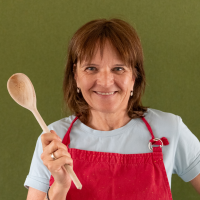
Chef of the Village Inn – Patrick Trois
Schlutzkrapfen: Traditional Variety
Schlutzkrapfen is a very fitting name for this dish. Just as straightforward and a bit merciless as the Tyroleans themselves, who evidently named these dumplings after their slight slipperiness, which is characteristic of them after bathing in saltwater. The term "Krapfen" is somewhat confusing, as the Schlutzkrapfen are related to Faschingskrapfen only in the sense that they contain a delicious filling. However, this filling is not hidden in a sweet yeast dough, but in a pasta dough. It’s no wonder that the Italians refer to Schlutzkrapfen with reference to their own variant as "ravioli tirolesi" or more poetically – in reference to the shape – as "Mezzelune" (half-moons). The people of Carinthia call their version "Kärntner Nudeln" and the Swabians are happy to have Maultaschen. However, Schlutzkrapfen – and this can be justly and subjectively asserted in the heart of Tyrol – are the best.

Authentic Traditional Dish – Hearty Schlutzkrapfen
A master at work
In no time at all, Patrick Trois is kneading the dough. He's quickly "coupled" rye flour, wheat flour, eggs, oil, and salt in the bowl, surprising even the ingredients with their lightning-fast transformation. "If it's not too hot, the dough can rest a little longer," the chef points out, referring to the often practical option of preparing the dough beforehand to avoid delays accompanied by family hunger just before mealtime. "The dough rolls out best at room temperature," the master adds, and is already rolling a dough disc on the floured work surface with a rolling pin. Those conspiracy theorists, who have recently regained popularity and refuse to believe the Earth is round, would have a great time with this.
But the dough won't stay flat and undisturbed for long, as Patrick has already picked up a cookie cutter with which he begins to cut out many small discs. Since round and square shapes don't quite fit together except on a soccer field, the fun-shaped dough pieces are kneaded back together between the discs, rolled out, and a round base is created once more for one or two more Schlutzkrapfen. Perhaps those that will have to settle a dispute at the dining table more driven by fun than hunger.


Cooking with Passion
Now it is time for abundance. The village tavern in Mösern, specifically Patrick Trois' father, Josef Trois, was a founding member of the "Culinarium Alpentraum", a thoroughly tasteful initiative on the Seefeld plateau that is dedicated to fine ingredients from the region, respect for the seasons, and the high quality of exquisite, local cuisine. Eight "passionate hosts" have dedicated themselves to this, and for 20 years, alpine cuisine has consistently been elevated in the Culinarium Alpentraum restaurants. This is also the reason why Patrick Trois, who became head chef in 2006 and two years ago also took over as head of the establishment opened in mid-December 1986 in Mösern, is extremely selective when it comes to choosing his ingredients. Be it Schlutzkrapfen or any of the other delicacies promised on the village tavern's menu.


Fill in a shell and abundance
Once again, his own preference serves as the benchmark – for the flavor profile of the filling that goes into the Schlutzkrapfen. "I prefer spinach the most. Of course, you can also use pumpkin or mushrooms or meat – depending on taste and the season. Spinach always works," he says. For those who want something really hearty, a gray cheese filling can also be prepared. There is no shortage of variations. However, Patrick likes spinach, so he finely chops the onion, sautés it in butter until golden brown, and then quickly mixes in the spinach, salt, pepper, nutmeg, and grated mountain cheese.

Preparation of the Filling
This already promising mass is now being smeared on the round disks, the edges are brushed with egg, folded over, and pressed firmly with a fork. They are half-moons, and the Italians are right about that. "You can also freeze them very well," Patrick adds shortly after this step, making it clear that it's definitely worth producing larger quantities to avoid finding oneself in a bind during strong cravings for these dumplings.

Preparation of Schlutzkrapfen
Nothing works without family.
By the way, Patrick took a little detour before discovering the kitchen as his world: "I went to business school for two years. Sitting down and studying wasn't really for me. Then I became a cook, like my dad. It’s in our blood." Nice.
While he shares that his parents still like to help out, Edith Trois enters the kitchen and checks with the thoughtful hospitality that passionate hosts often have, whether everything is going well. It is indeed, as the saltwater in the large pot has long since started to bubble, warmly embracing the Schlutzkrapfen. At the moment, Patrick isn't paying attention to that; instead, he is making sure a generous piece of butter in a pan is slowly turning brown. Now, the moment arrives that explains the name. The bath for the dumplings is over. With a slotted spoon, the chef gently lifts them out – a delicate touch is quite necessary, as the outer consistency of the half-moons is just as they are called – "slutzy" or rather slippery, which in hastier movements could lead to a Schlutzkrapfen becoming independent. That doesn't happen to Patrick. "I'm just toasting them a bit in the butter now," he explains. Promising, isn't it?

Searing the Schlutzkrapfen
The Dance of the Taste Buds
The taste buds begin to dance slowly as the eyes and nose relay the stimuli, placing the whole body in a joyful state of anticipation. Out of the pan, onto the plates, grated cheese, the rest of the butter on top – and the first bite of the Schlutzkrapfen into the mouth. Now they dance, the buds. A Tyrolean dance, of course.

Topped with Parmesan, the Schlutzkrapfen are completed
Those whose mouths are watering and absolutely want to try Schlutzkrapfen can either do so at the Dorfkrug Mösern – or simply cook them at home! You can find the recipe à la Patrick Trois here.
You might also be interested in
More blog posts

Summer, Spring & autumn, Kitchen
Cherry Michl Like Grandma – A Tyrolean Casserole Full of Childhood Memories


Summer, Spring & autumn, Kitchen
Burning Soup like in the Alpine Hut – Tyrolean Soup Tradition with Heart


Kitchen, Spring & autumn, Summer
Veal Sausage Salad: The Perfect Snack for Connoisseurs

von Janina Sauer
21 May 2024

Tips & recommendations, Kitchen
These are the best veggie restaurants in the Seefeld region

von Nicolas Lair
05 April 2024

Kitchen, Spring & autumn
Host Franz's Secret Recipe for Irresistible Kasnocken
von Janina Sauer
03 April 2024





Kitchen, Tips & recommendations
The Seefeld Plateau Breakfast: Your Truly Sustainable Start to the Day!


Kitchen
Easter Recipe: Sweet Filled Easter Eggs with Spruce Parfait and Red Clover Sorbet

von Tessa Mellinger
25 March 2021





Kitchen, True locals
Recipes from the Henhouse: Herb Roll of Chicken Fillet with Potato Noodles
von Tessa Mellinger
04 September 2018

Kitchen
In Strudel Paradise: Organic Pulled Pork Strudel and Kletz Strudel
von Tessa Mellinger
04 July 2018


Kitchen
Christmas Delight: Baked Apple Recipe "Alpin Resort Sacher Seefeld - Tirol Art 2.0"
von Tessa Mellinger
17 December 2017
Blog Tags
Share