



11 November 2022
COOKING ROOM
From the Leutascher Klammstüberl: Sonja's Kiachl recipe
Thick fog hangs over the Leutascher Geisterklamm as we reach the small Klammstüberl at the entrance to the steep gorge. Despite the early hour, the two hosts Sonja and Hansjörg are already busy at work, as fresh Kiachl (fried pastries) are being baked today. Sonja's Kiachl are known far beyond the regional borders – previously at Hämmermoosalm in Gaistal, and now at the Klammstüberl at the other end of the long Leutascher Hoch valley. The significant advantage is that you no longer have to climb a mountain to taste the best Kiachl in the region. And Sonja can even invite us into the small Klammkuchl (kitchen) just before the end of the season to watch her bake the Kiachl.
Hosts with heart and soul
Hansjörg is waving from afar and calls out a greeting to us. Visiting the two always feels a bit like being with Grandma and Grandpa, such a warm welcome awaits us here. In fact, the two tried to enjoy a well-deserved retirement after the Hämmermoosalm. Sonja even managed to endure an entire winter season, Hansjörg laughs from ear to ear and invites us into the cozy room. Sonja is already in the kitchen, shaking the flour dust off her apron. Sometimes she misses the large mixer from the Hämmermoosalm, she laughingly holds up the small hand mixer. In front of her stands a hefty bowl of yeast dough that smells wonderfully tempting. Sonja briefly explains the recipe, and then we get to help shape and bake the Kiachl.


The Leutasch Klammkiachl
Ingredients
- 50 dag (500g) all-purpose flour
- ½ cube of yeast (about 21g, or can use ½ package of dry yeast)
- 2 fresh free-range eggs
- 1 pinch of salt
- 2 dag (20g) soft organic butter
- About ¼ l (250ml) lukewarm organic fresh milk
- 1 tbsp domestic rum (or rum flavor)
Preparation
As with any authentic Tyrolean yeast dough, start by mixing a small amount of yeast, milk, flour, and possibly a tiny pinch of sugar to create a sponge – a thick pre-dough to "wake up" the yeast. When the sponge produces small bubbles after about half an hour in a warm, calm place, follow with the remaining ingredients: stir in the lukewarm milk, beaten eggs, melted and cooled butter, and a splash of rum, mixing with flour and salt to form a moderately firm dough. Now cover the dough and let it rise in a warm place for about 25 to 30 minutes. Then use a spoon to cut out pieces of dough, shape them into balls, and let them rest again covered on a floured board for another 15 to 20 minutes.


Now follows the "stretching" of the Kiachl. Carefully pull apart the prepared pieces of dough so that the dough becomes thin in the middle, while remaining thick and airy at the edges. A little tip from Klammkuchl: In the past, people would "stretch" the Kiachl over their own knee. Afterwards, the stretched Kiachl (first with the upper side down) are baked to a golden yellow in hot clarified butter. Let them drain well and optionally serve with a scoop of cabbage or lingonberries sprinkled with powdered sugar. If you do not bake all the Kiachl right away, you can also freeze them and bake them from the deep freezer as needed.
Little Tyrolean Kiachl Stories
During our joint baking session, Sonja naturally has a wealth of interesting information to share about the airy traditional pastry from Tyrol: In the past, Kiachl was served as a side dish with almost everything. They are not only quicker and cheaper to prepare than sourdough bread, but also particularly filling for the demanding work in the mountains. The Kiachl with cabbage is especially typical for the provincial capital of Innsbruck, once the stronghold of Tyrolean cabbage farmers. The rest is already history in Leutasch, Sonja chuckles, and invites us to enjoy a good serving of cabbage. For dessert, we have one with berries (wild cranberries) and powdered sugar – luckily we are two.

A true Tyrolean traditional dish
The last Leutasch Kiachlbäckerin
By the way, Sonja revealed her legendary Kiachl recipe to us for good reason: In Leutasch, she is already among the last to still feature the traditional Kiachl on the menu. Especially in winter, the Kiachl are particularly popular with us. Exactly then, when the small Leutascher Klammstüberl and Sonja's Kiachl-Kuchl remain closed. Those who make a big secret out of a good recipe will not find good Kiachl anywhere else, Grandma Sonja winks. And because true Kiachl art primarily tastes of a lot of love, you learn best in Leutasch directly from Grandma. Until the beginning of May, we are now allowed to practice, then the Klammstüberl will reopen, Hansjörg winks over his cup (coffee mug). Until then, fresh Kiachl can only be found at the Seefeld Christmas Market – or you can simply make them yourself, like Sonja.

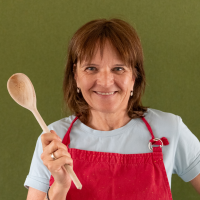
Landlady Sonja and Innkeeper Hansjoerg in front of their Klammstüberl
You might also be interested in
More blog posts

Summer, Spring & autumn, Kitchen
Cherry Michl Like Grandma – A Tyrolean Casserole Full of Childhood Memories


Summer, Spring & autumn, Kitchen
Burning Soup like in the Alpine Hut – Tyrolean Soup Tradition with Heart


Kitchen, Spring & autumn, Summer
Veal Sausage Salad: The Perfect Snack for Connoisseurs

von Janina Sauer
21 May 2024

Tips & recommendations, Kitchen
These are the best veggie restaurants in the Seefeld region
von Nicolas Lair
05 April 2024

Kitchen, Spring & autumn
Host Franz's Secret Recipe for Irresistible Kasnocken
von Janina Sauer
03 April 2024


Kitchen, Tips & recommendations
The Seefeld Plateau Breakfast: Your Truly Sustainable Start to the Day!


Kitchen
Easter Recipe: Sweet Filled Easter Eggs with Spruce Parfait and Red Clover Sorbet

von Tessa Mellinger
25 March 2021





Kitchen, True locals
Recipes from the Henhouse: Herb Roll of Chicken Fillet with Potato Noodles
von Tessa Mellinger
04 September 2018

Kitchen
In Strudel Paradise: Organic Pulled Pork Strudel and Kletz Strudel
von Tessa Mellinger
04 July 2018




Kitchen
Christmas Delight: Baked Apple Recipe "Alpin Resort Sacher Seefeld - Tirol Art 2.0"
von Tessa Mellinger
17 December 2017
Share