

Insights into the Seefeld Region
PlateauIntern
What tourist themes occupy the Seefeld region? What is happening in terms of tourism marketing?
What everyday tasks does the tourism association fulfill and what projects does it implement for the region, its members, and the public?
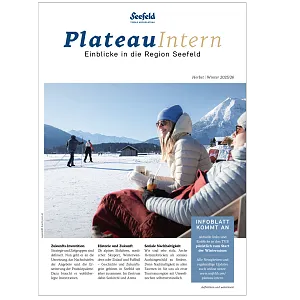
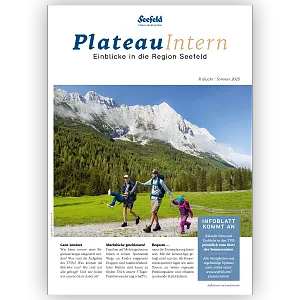
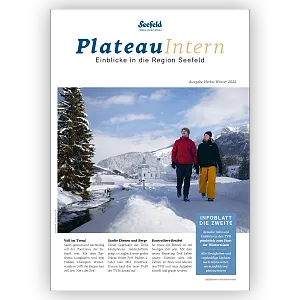
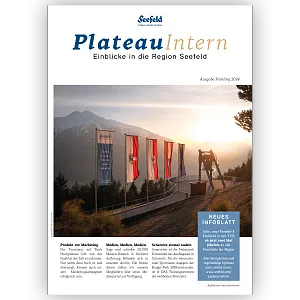
On our new platform PlateauIntern, we keep you updated on the latest developments in the tourism association and at the plateau, and report on our newest projects. The platform is aimed at our members and stakeholders as well as all residents and employees on Tyrol's high plateau. Furthermore, you will receive our compact print edition biannually, delivered directly to your home.
Concise and to the point
Current news brief

Singing Leutaschtal
Like every year, Monika and Hansi Bantl organized three musical hiking days through the Leutaschtal at the end of August. This time, Vinzenz Arnold, the vocal coach of the Wiltener Sängerknaben, was also present. The TVB supported the event with promotion, organization, and registration. Our graphic department lovingly designed the song books, which thanks to Monika's old sheet music, are something very special each year.
September 4, 2026
Latest information and developments from the region
Detailed Reports


Do you know that...
... that the high alpine huts in the Karwendel are all over 100 years old? The Karwendelhaus was opened in 1908, the Hallerangerhaus in 1924 and the Pfeishütte in 1927; the Nördlinger Hütte has even been around since 1898. So the Pleisenhütte, with "only" 73 years, is practically a young upstart.
... that there are undocumented fragments of Gothic stained glass in the Seefeld parish church? The experienced restorer Martin Bucher from Vienna discovered them and describes it as a "once-in-a-lifetime moment".
... that in the past, not only the guests were nervous because of the Zirler Berg? Absolutely everyone stopped at the Osötz chapel (in high German, Absetz-Kapelle) at the end of Leithen and sent a short prayer Heavenwards. Depending on the direction of travel, the exhausted horses were either swapped out or the brake shoes were wedged between the wheels.